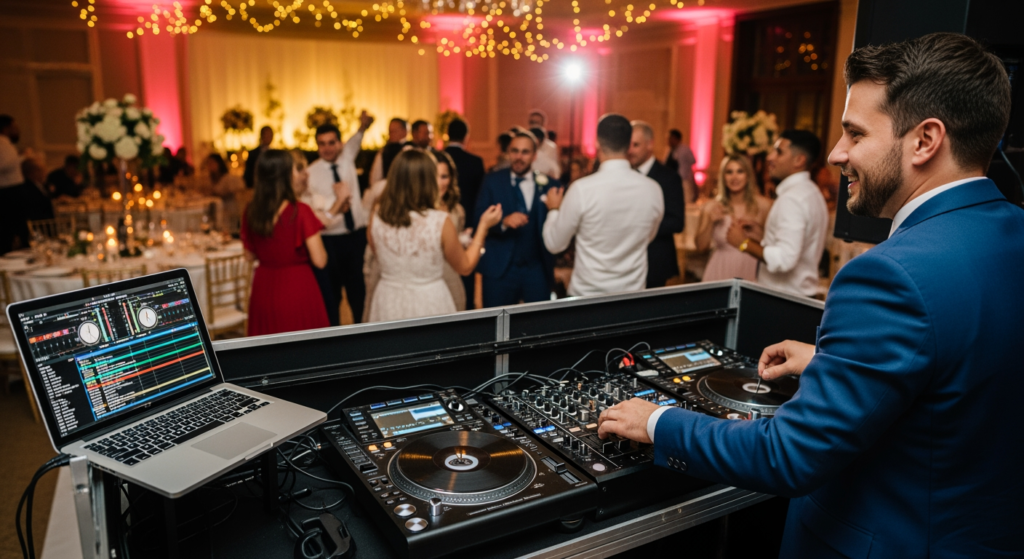
When planning music for your reception, the right soundtrack can make the night unforgettable. If you’re searching for djs for weddings, this local guide walks you through everything I’ve learned over a decade helping couples pick the perfect performer. Local trends and planning tips matter — recent industry shifts picked up by the national statistics office show how couples are booking differently after the pandemic, which affects availability and pricing in cities like London, UK and nearby neighborhoods such as Camden, Shoreditch, Kensington, and Greenwich. ONS data makes it clear that demand is concentrated in urban centers, so early planning will pay off.
Why the right DJ changes everything
Music does more than fill silence. It shapes emotion, smooths transitions, and keeps guests on the dancefloor. A wedding DJ who understands pacing and reads a crowd can rescue a slow moment, highlight an emotional speech, or switch gears seamlessly between dinner and dancing. I’ve seen receptions transformed by an intuitive playlist, and I’ve also seen poorly managed music drag a celebration down. Choosing wisely means picking a professional who balances ceremony cues, family dynamics, and the party atmosphere you want.
Local realities to consider in London and the surrounding area
Booking local talent comes with perks. A DJ who works in the city knows venue layouts, sound restrictions, and preferred vendors. They’ve likely played at both riverside venues near Greenwich and intimate spaces in Camden, so they understand how to adapt sound for high ceilings, wooden floors, or outdoor terraces. Local DJs also keep realistic timeframes for setup and soundchecks, which helps your timeline stay on track.
In dense urban settings, noise rules and venue curfews are common. Ask about experience with council regulations and temporary event notices if your venue requires them. A DJ who knows the local scene will arrive with the right equipment and the right permits, reducing late-night surprises.
Top trends in wedding entertainment right now
Two trends are shaping wedding music this year. First, hybrid and live-streamed weddings are here to stay. Couples now expect a DJ who can deliver a great in-person vibe while ensuring the stream captures speeches and music cleanly for guests watching from home. Second, eco-conscious celebrations influence DJ choices. Couples are looking for providers who use energy-efficient gear, reusable packaging, and who prioritize low-emission travel when possible.
Other notable trends include headline-style DJ sets during peak hours, short live-band collaborations for ceremony or first dance, and vinyl or retro setups for a distinctive aesthetic. Silent discos have also surged in popularity for late-night parties at venues with strict sound curfews.
How DJs for weddings typically price their services
Pricing can vary based on date, location, equipment, and experience. Peak-season Saturdays in central London will cost more than an off-peak weekday. Expect higher rates for DJs who include MC duties, custom playlists, live mixing, or lighting packages. Some DJs charge a flat fee for the day, while others itemize travel, setup time, and add-ons like a second DJ or uplighting.
To compare quotes fairly, ask each DJ for the same baseline: number of hours of performance, travel, setup and teardown times, and the exact equipment included. That makes it easier to assess value rather than just price.
Questions to ask before you hire
- Can you describe a typical wedding you DJ? Ask for the flow, from ceremony to last dance.
- Do you handle MC duties and guest requests? Clarify how strictly they will take requests vs. stick to a pre-approved list.
- What equipment do you bring and do you have backup gear? A professional brings spares and noise-limiting tools if needed.
- Are you insured and do you have references from venues in this city? Insurance and venue familiarity reduce risk.
How to evaluate a DJ’s musical style and fit
Listening to sample mixes, watching video from previous weddings, and reading reviews give you a sense of a DJ’s energy. But samples can be produced and don’t always show crowd-read skills. Ask about a DJ’s approach to requests and cross-genre blending. A great wedding DJ will ask about the couple’s must-play and must-avoid lists and create a flexible plan that still leaves room for improvisation based on the crowd.
Ask for a short meeting or a live audition if possible. Meet-and-greets let you test communication style and confirm they understand the tone you want: relaxed and lounge-like, or high-energy and upbeat. If you have family members with strong music opinions, involve them in the conversation early to avoid surprises on the night.
Building your wedding music timeline
A clear timeline helps your DJ and photographer coordinate. Here’s a typical flow you can adapt for your venue and schedule:
Ceremony
Choose entrance, signing, and exit songs in advance. Decide whether you want recorded music or live accompaniment. If the DJ will handle ceremony audio, confirm lapel mic and speaker placement for vows.
Drinks and canapés
Background music should set the tone without overpowering conversation. Jazz, acoustic remixes, or instrumental versions of pop songs work well here.
Reception meal
Keep music low during dinner. This is the time for more intimate tracks and for transitioning between courses without abrupt changes.
Speeches and formal moments
Coordinate with the DJ on cues for speech starts and endings. A brief music fade-out before a speech and a gentle underscore after help keep the flow professional.
First dance and floor-opening
Plan first-dance timing carefully—many DJs prefer to do the first dance shortly after speeches so the momentum builds into the evening party. Choose a song and confirm whether you want an extended intro or radio edit.
Simple steps to book a local DJ
Booking doesn’t have to be complicated. Follow these steps to secure a great DJ in the city.
- Start early. For peak months, book at least 9–12 months ahead to lock in top local talent.
- Compare 2–3 quotes and ask identical questions so you can compare apples to apples.
- Request a written contract that spells out arrival times, equipment, backup plans, and payment milestones.
- Keep a short do-not-play list and a few must-play songs to guide the DJ’s choices.
Practical tips for the ceremony and reception
Here are a few practical tips I share with couples in London and nearby neighborhoods to make sound run smoothly on the day.
First, share venue floorplans with your DJ. Knowing where to place speakers prevents dead zones and feedback. Second, coordinate with the venue about power access and indoor/outdoor transitions; some venues restrict equipment near historic features or outdoor lawns. Third, prepare a trusted point person—often your planner or a family member—who can handle last-minute requests so the couple stays present.
Handling common problems on the day
Even with planning, issues can arise. Equipment failures, unexpected weather for outdoor sets, or an overly talkative aunt requesting 15 songs are common scenarios. A professional DJ anticipates these problems: they arrive early to test equipment, pack backups, and hold a brief rehearsal with the venue staff. If a stubborn relative monopolizes the request list, a calm but firm DJ will politely steer requests and protect the evening’s flow.
How to make the music feel personal
Personalization is what separates a good DJ from a great one. Share stories about how you met, songs that matter to your family, and moments you want to highlight. A skilled DJ weaves those motifs into the set without sounding forced. Consider a short, meaningful playlist for the first half of dancing, then allow the DJ to ramp up energy as the night progresses.
Budgeting a realistic music package
Factor in these common items when budgeting for music in the city: performance hours, travel fees, MC services, lighting, and extras like a second DJ or vinyl setup. Don’t forget to include a contingency for overtime—the last thing you want is to cut the party short because you guessed wrong on time. A small holdback for overtime or additional hours can make the evening much smoother.
FAQ
How early should a DJ arrive?
Typically an hour for small venues and up to two hours for complex setups or larger venues. Early arrival allows for sound checks and coordination with caterers and venue staff.
Can DJs handle both ceremony and reception?
Many DJs provide ceremony audio and reception music, but confirm whether they need extra gear or assistants for outdoor ceremonies. If the ceremony and reception are at different locations, check travel time and any logistical charges.
Should I provide a playlist or let the DJ choose?
Most couples give a mix: a must-play list for favorite moments and a general vibe for the DJ to read the room. This balances control with professional crowd-reading.
Final checklist for the day
- Confirm arrival time and setup location with the DJ and venue contact.
- Share a final timeline with key moments and contact phone numbers.
- Provide any special-requests list and do-not-play list in writing.
- Ensure someone on the day (planner or family) can manage small last-minute changes.
Choosing the right music partner is about trust, taste, and local experience. A DJ who knows the city, understands venue quirks, and can adapt to your guests will keep the night moving and create memories that last. If you want help narrowing options and booking a team that fits your vision, consider reaching out to Spin Sisters for a conversation. Spin Sisters can help match you with DJs for weddings in London and surrounding neighborhoods to suit your style and budget.